


Non basta leggerlo, vieni a viverlo!
Scopri i nostri tour


.avif)
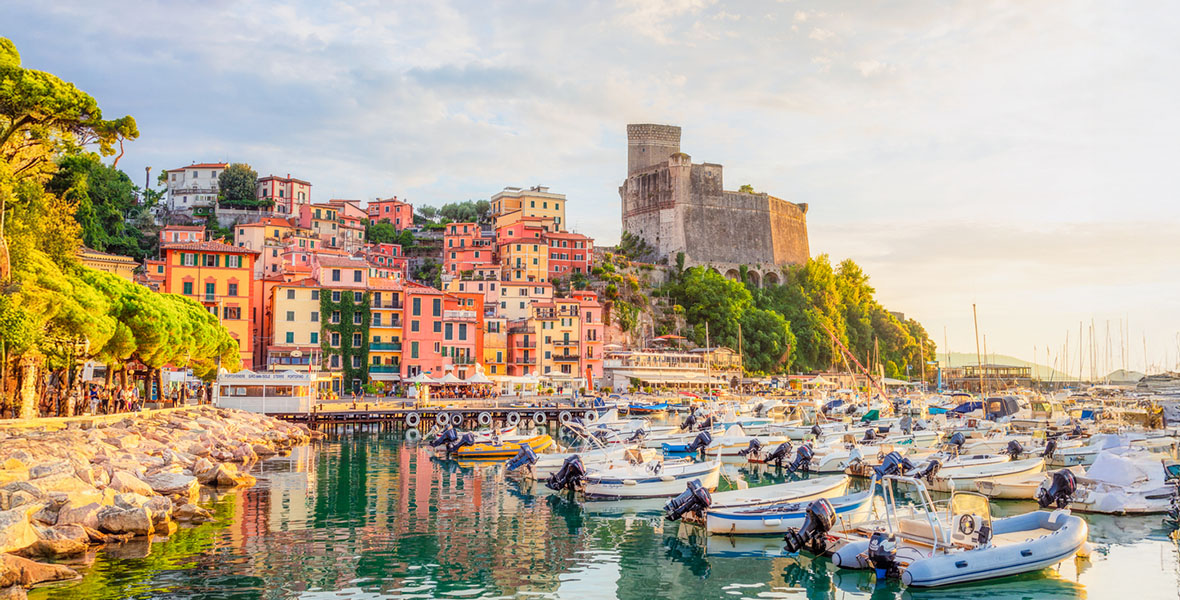
Lord Byron and the Gulf of Poets: poetry, sea and legend between La Spezia, Portovenere and Lerici, on the trail of English romantics

When George Gordon Byron, who went down in history as Lord Byron, arrives in Italy, is a man on the run. A famous poet, a non-conformist aristocrat and a profoundly rebellious spirit, Byron was already a controversial figure in England at the time, both for his verses and for his private life considered scandalous. Relationships judged to be unacceptable, behavior out of the norm and a character intolerant to social conventions pushed him to leave his country, finding in Italy a place of greater personal and intellectual freedom.
Byron was a real poet-activist and believed that writing should be translated into concrete experience, into action, into a lived life. In the early 19th century, between Spezia, Portovenere and Lerici, he found a territory that perfectly reflected his free and wild spirit.

Among the most fascinating stories related to Lord Byron is the famous Legend of the swimming crossing. According to tradition, the poet regularly crossed the stretch of sea between Lerici and Portovenere, driven by a deep need for freedom and contact with the elements.
This gesture has become a symbol of his romantic and non-conformist character: a single man, the open sea, no border other than the one imposed by himself.
From this legend takes its name Byron Cup, a historic open-water swimming competition that still takes place today in the Gulf of Poets. The race recalls its crossings.
To testify to this deep bond between Byron and the sea, there is still a strongly symbolic place today: the Byron Cave, set in the rock at the foot of the church of San Pietro in Portovenere. The cave takes its name from the poet precisely because of the tradition that wants him to swim to this point, finding here a natural refuge where sea and thought seemed to merge.
It is no coincidence that this place has become one of the most evocative symbols of the Gulf of Poets: not for what it shows, but for what it tells.

Byron did not experience the Gulf of Poets in solitude. In these same years, the territory was also home to Percy Shelley and Mary Shelley, author of the famous Frankenstein. Between Byron and the Shelleys there was a deep relationship, made of friendship, intellectual confrontation and a common vision of life.
They sailed together, discussed, shared ideas and concerns. The Gulf thus became the center of a real romantic community, in which poetry, sea and personal freedom were intertwined without clear boundaries.
Crossing the Gulf of Poets today means moving into a living narrative. The cliffs, villages and creeks preserve the echo of those swims, those conversations, those lives lived intensely.
Here the poem did not remain on paper. It has entered the sea, the rock and the landscape. And this is perhaps why the Gulf of Poets continues to be a place that is not only visited, but experienced.