


Non basta leggerlo, vieni a viverlo!
Scopri i nostri tour

.avif)
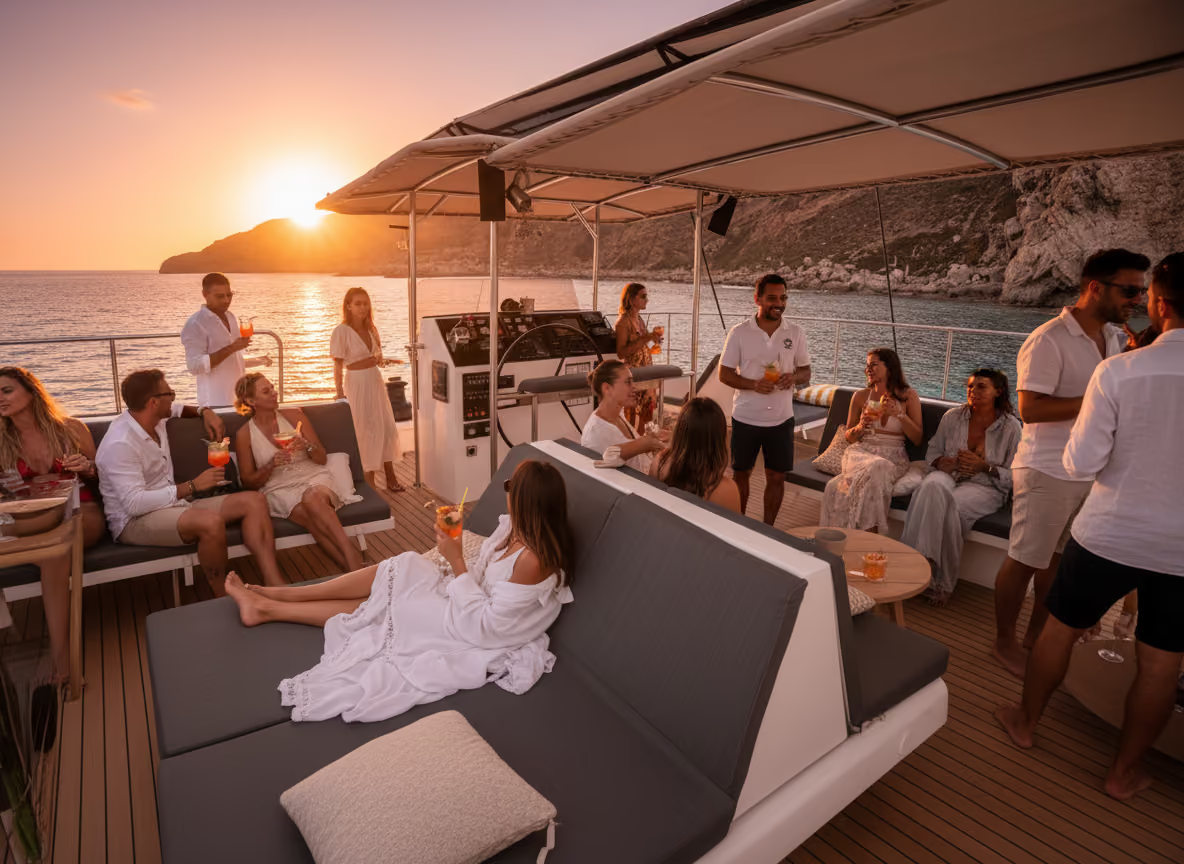
Tellaro and Lerici from the sea: two complementary villages in the Gulf of Poets in Liguria, to be observed while sailing along the coast with Alegria Catamarano.
In the stretch of coast between Lerici and Tellaro, the sea is not a simple geographical border: it is the original road, the first real access to the territory. Even before roads and trails, it was the boats that connected these villages, that carried people, goods, stories and customs. Even today, during a catamaran tour along the coast, it is the water that gives back the most authentic vision of the Ligurian villages.
Navigating allows us to understand why these places were born right there, how they adapted to the rock, the wind, the light. The sea becomes a key to understanding, capable of telling what often escapes from land.
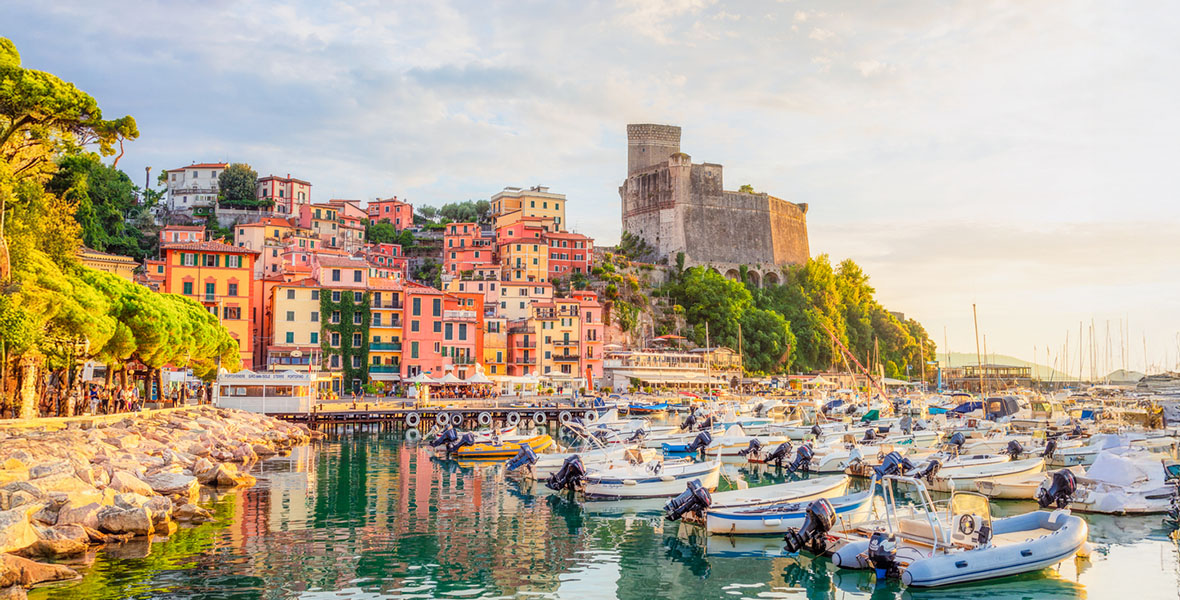
Lerici, shows itself from the sea with a large and bright character. The castle of San Giorgio dominates the promontory and takes a look at a village that seems to open up naturally to the horizon. Its position tells of a historic vocation for the defense and control of routes, but also for hospitality.
Overlooking a rocky spur, the Church of San Giorgio is one of the most recognizable symbols of the coastal landscape. Dating back to the 16th century, it stands out for its unmistakable pastel pink color, soft and harmonious. Inside it houses marbles that, according to tradition, come from the church of Barbazzano, as well as a marble altarpiece from the same period, testimony to the artistic and religious history of the territory.
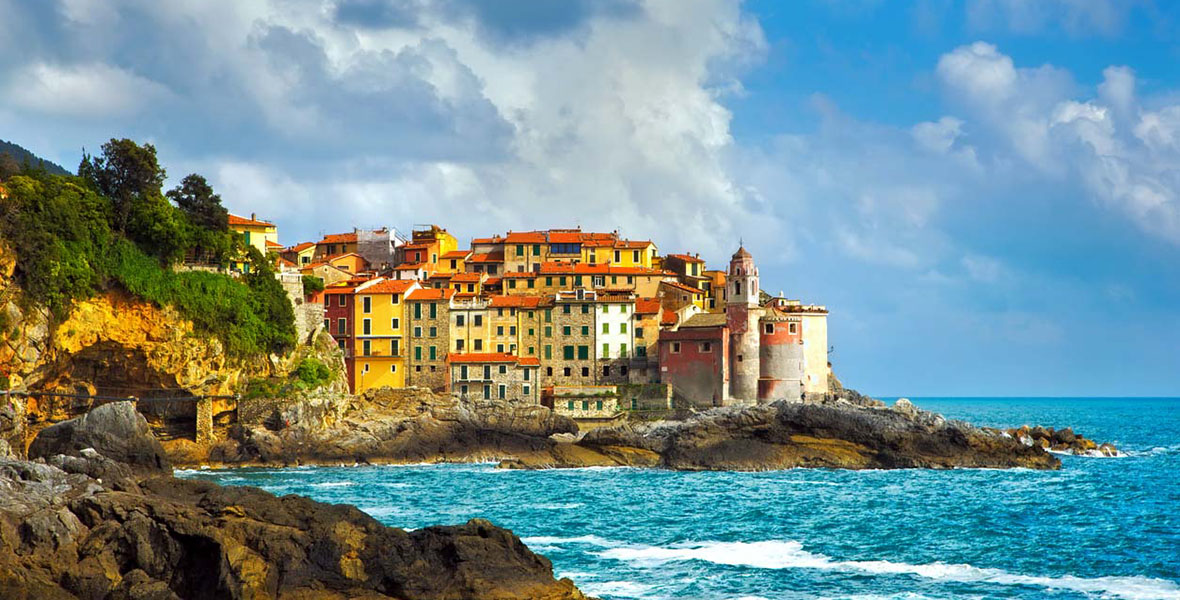
Continuing along the coast, the landscape changes pace and the village of Tellaro suddenly appears directly overlooking the rocks, as if it had emerged from the rock to seek protection in the sea. This choice is not random: Tellaro was founded in the 14th century, when the inhabitants of the nearby hilly village of Barbazzano, threatened and finally destroyed by Saracen raids, found refuge along the coast, in a small, naturally defensible cove. The sea, once again, was not only a border but an ally.
From the sea, Tellaro reveals all its elegance. Pastel-colored houses seem to be born from the rock itself, following its shapes without forcing them, as a result of spontaneous growth. The church of San Giorgio watches over water, recalling the symbolic and protective role that the sea has always played for the community. Every architectural element seems designed to coexist with the landscape, not to dominate it, reflecting a balance built over the centuries.
Tellaro is compact, essential, collected. A village that invites you to slow down, to observe carefully, to let yourself be guided by the light that changes over the course of the day and continuously transforms colors and reflections. Here, time still seems to follow the rhythm of the sea, the same that determined its birth, form and identity.
Lerici and Tellaro talk about two different ways of experiencing the sea. Lerici is openness, relationship, movement. Tellaro is introspection, elegance, silence. One welcomes, the other guards.
Seen from the sea, these two villages are not opposed, but complement each other. Sailing along the coast makes this complementarity evident, transforming the journey into a continuous story made of curves, cliffs and ever new perspectives.
During the direct tour to Tellaro, the Alegria catamaran sails along the coast offering a privileged observation point. From the sea, the view is wide and stable, time seems to expand and the landscape reveals itself without haste.
Navigation is not just a means to get there, but an integral part of the experience. Tellaro, seen from the water, fully expresses its luminous elegance and its deep bond with the sea.